










We conduct independent research into significant challenges to the economy, society and the welfare state in a global world.

Become part of our research team

Research

Fact of the day

The ROCKWOOL Foundation Berlin Institute for the Economy and the Future of Work (RFBerlin) engages in research designed to raise the standard of public debate and create the best possible basis for policy making.

Equity, Inclusion & Opportunity
Migration & Global Collaboration
Technology, Trade & Human Capital

Discussion papers

No. 140/26 - May 2026

Workplace Flexibility and the Motherhood Penalty: Evidence from the Diffusion of Remote Work

Gaetano Basso, Maria De Paola, Salvatore Lattanzio, Matteo Paradisi

No. 139/26 - May 2026

Delaying Fertility, Advancing Careers: The Lasting Consequences of Growing Up with a Safety Net

Matias Giaccobasso

No. 138/26 - May 2026

Targeting Attitudes to Combat Sexual Harassment: A Randomized Intervention in the Norwegian Military

Olle Folke, Torbjørn Hanson, Åshild A. Johnsen, Andreas Kotsadam, Johanna Rickne

No. 137/26 - May 2026

Indirect Estimators of Intergenerational Mobility

Andrea Del Pizzo, Martin Nybom, Jan Stuhler

Research Insights

Concise, research-based articles for scholars,
policymakers, and anyone curious about the world.

No. 18/26 - May 2026

Religion and Economic Growth: What We Know and Why It Matters

Why are some countries rich and others poor? Economists have long pointed to investment, education, and technology. But one factor has been largely overlooked: religion.

Learn more

No. 17/26 - May 2026

Paying for Peers? How Swiss Parents Value School Quality and Composition

Where you live is where your child learns. In Switzerland, residential address determines school assignment, leaving parents with a stark choice: pay for private education or move.

Learn more

No. 16/26 - May 2026

When Checklists Backfire: Too Much Control Can Harm Workers and Sales 

The quality of management practices is crucial for both productivity of firms and the wellbeing of workers. Many firms use checklists as a management practice. Top managers often believe in the benefits of checklists as a mechanism to assure product and service quality. But what about workers?

Learn more

CReAM Reports

Data-driven reports on migration and related economic and social trends, highlighting the latest developments across Europe and beyond.

No. 4/26 - May 2026

Immigrant Educational Attainment in the European Union: Origin, Gender and Cross-Country Differences

This report examines educational attainment among natives, EU-born immigrants, and non-EU-born immigrants across the European Union, highlighting how differences by origin, gender, and country continue to shape educational outcomes despite a general rise in tertiary attainment since 2017.

View report

No. 3/26 - April 2026

The Immigrant Population in the European Union: Growth, Concentration and Dispersion

The EU hosts a record 64 million foreign-born residents, with migration continuing to grow strongly, though unevenly across countries. While Germany and Spain dominate in absolute numbers, smaller Member States often face greater relative pressure.

View report

No. 2/26 - March 2026

Migration Aspirations, Diaspora Networks and Refugee Destinations from Iran and Lebanon

Migration from Iran and Lebanon largely follows existing diaspora routes, especially to Germany and Canada. If displacement rises, flows will likely concentrate in a few high-income countries, with education shaping how widely destinations are considered.

View report

News

RFBerlin research and researchers are regularly featured in the press.

Press release

20 May 2026

Religion plays a greater role in the economy than previously thought
View article
Press

18 May 2026

CReAM Report on Immigrant Educational Attainment in the European Union in International Media
View article
CReAM at RFBerlin

15 May 2026

Immigrant Educational Attainment in the European Union: Origin, Gender and Cross-Country Differences
Read report
Press release

15 May 2026

Tertiary Education Rates Among Immigrants in Europe Reach Record Highs, but EU Averages Hide Large Differences by Origin, Gender and Country
View article

Tweets by @RF_Berlin

🧠RFBerlin Research Insight!

Swiss parents can’t choose their school, so they choose their neighborhood. A survey of 2,700 parents finds academic quality is the #1 driver, but peer composition matters too, and families pay for both through higher housing costs. School policy is

Are immigrants in Europe more or less educated than natives? It depends very much on where you look and who you compare.

A new CReAM at RFBerlin report by Christian Dustmann, Tommaso Frattini, and Camilla Piovesan shows that in some countries immigrants are more likely than

🧠New RFBerlin Research Insight!

Are checklists costing you your best people?

New research by @GuidoFriebel, Matthias Heinz, Mitchell Hoffman, Tobias Kretschmer & Nikolay Zubanov studied a large German bakery chain that removed burdensome checklists from half its stores.

The

Apply to join the masterclass by Alexandre Mas. Deadline is today!

👉 Form: https://form.typeform.com/to/C1nGx934

🔗 Event details: https://www.rfberlin.com/event/masterclass-mas/

Get a comprehensive overview through the analysis of revealed-preference methods for non-wage amenities in the workplace.

#EconPhD

Upcoming events

RFBerlin hosts a wide array of events aimed at fostering academic research and collaboration.

RFBerlin Applied Economics Seminar

20 May 2026

Jacob Moscona (MIT)

Public R&D Meets Economic Development: Embrapa and Brazil’s Agricultural Revolution

RFBerlin Applied Economics Seminar

26 May 2026

Isaac Sorkin (Stanford University)

Paired Movers

RFBerlin Applied Economics Seminar

2 June 2026

Laura Pilossoph (Duke University)

TBA

Handbook of Labor Economics – Chapter Previews

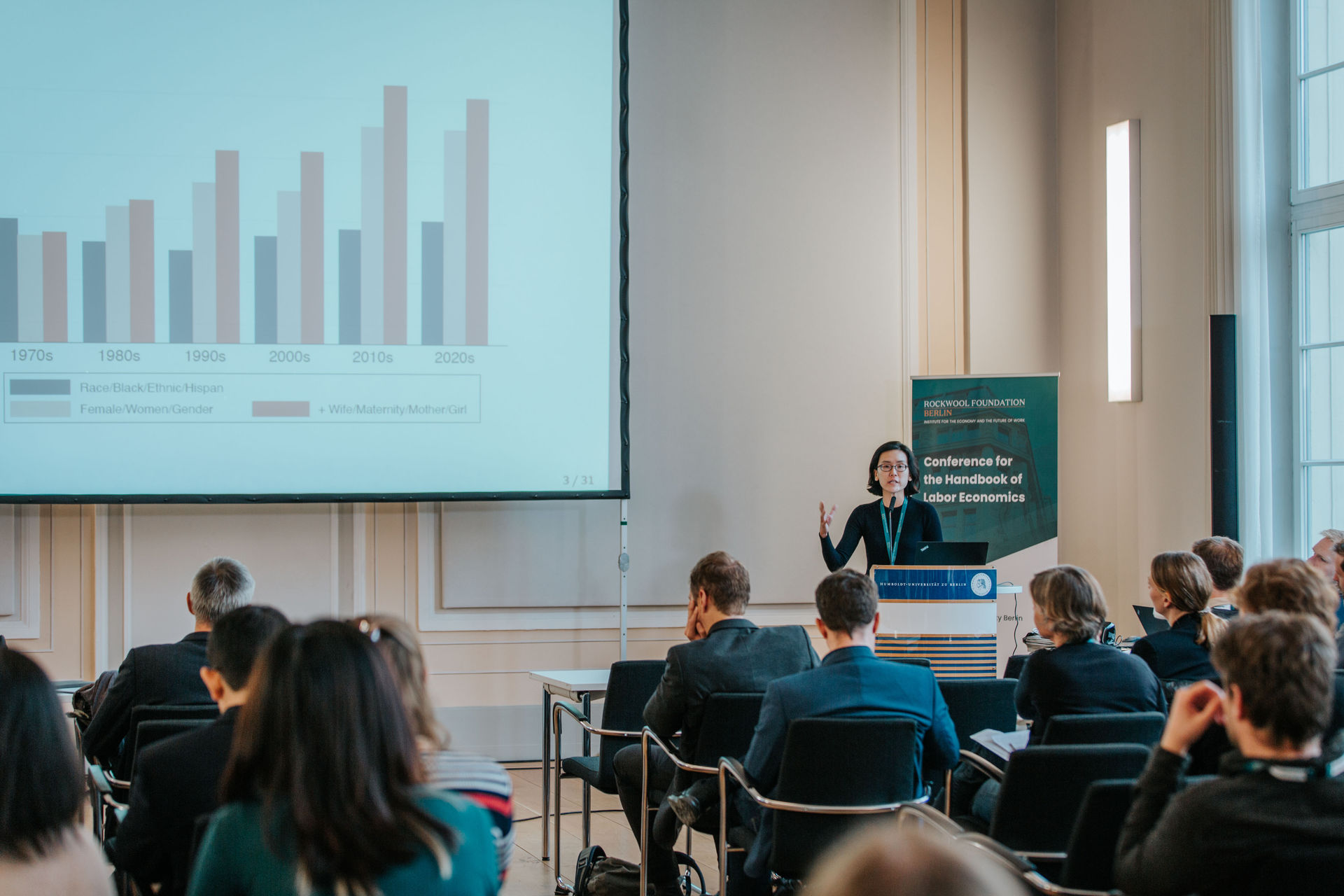
In anticipation of the upcoming Handbook of Labor Economics, we offer early access to select chapters through our Discussion Papers series. Following our 2023 conference on this new edition, first chapters are now available for preview, featuring insights from leading research in economics and labor.

Image link

Sign up to our newsletter

Keep up to date with upcoming RFBerlin events, our new research and other news from our research centre.